A Family Blender for Smoothies, Soups, and the Cleanup After
Choose a blender around texture, batch size, noise tolerance, and how willing you are to wash the blade assembly.
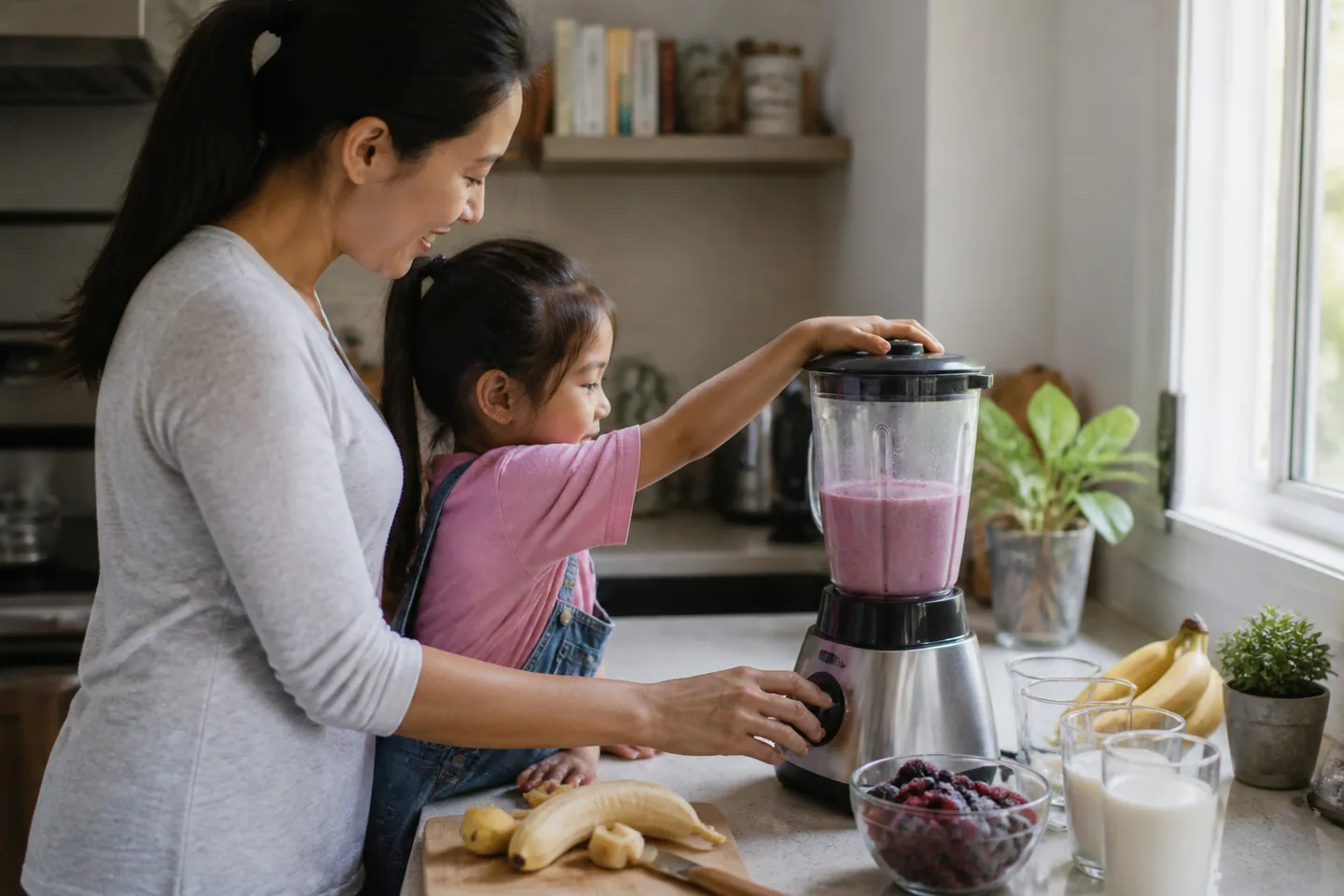
An original editorial scene created for Godi's A Geek. Products shown are unbranded and illustrative.
The after-school smoothie is berries, banana, and milk—not a restaurant kitchen. A blender that makes one good family batch and rinses clean quickly may be more useful than a high-powered machine with accessories in three cabinets.
The real-life problem this purchase should solve
List what you blend most often and whether ingredients are frozen, hot, or dry. Follow the manufacturer's guidance for hot liquids rather than assuming every jar can handle them.
Before opening a retailer tab, write down the exact place, person, and repeated task this purchase is meant to serve. That small step prevents a premium feature from becoming a substitute for fit.
What is worth paying for
A stable base, jar shape that feeds ingredients toward the blades, controls you understand, and replacement jars or seals sold separately.
- Batch capacity matched to household servings
- Jar and lid that disassemble for cleaning
- Stable base and readable controls
- Replacement parts with clear compatibility
Families making smoothies, sauces, and occasional purées several times a week.
The tradeoff: More powerful motors can handle tougher ingredients but may be louder, heavier, and more expensive.
What to skip
Skip accessory bundles without storage room, vague power comparisons, and personal cups with blade lids that are frustrating to clean.
Prices, bundles, availability, and model details change. Compare current published information and the latest manual before buying. When a product affects child safety, food handling, health, flooring, or electrical use, follow the manufacturer and relevant professional or public authority first.
A five-minute buying checklist
- Count normal servings
- Check cabinet clearance with jar attached
- Review hot-liquid restrictions
- Price replacement jar and gasket
- Save the receipt and the latest instructions in one place.
Our bottom line
Choose a blender around texture, batch size, noise tolerance, and how willing you are to wash the blade assembly. The strongest choice is usually the product that removes friction from a repeated task, fits the space you already have, and remains straightforward to maintain after the excitement of buying it has passed.
Frequently asked question
Do I need the most expensive version?
Usually not. Pay for the feature that solves your actual constraint—fit, cleanup, replaceable parts, durability, or safer operation—and be cautious about bundles built around accessories you have no clear plan to use.