How to Choose a Dish Drying Rack for a Crowded Counter
A drying rack should direct water into the sink, hold the dishes you hand-wash, and come apart before grime settles in.
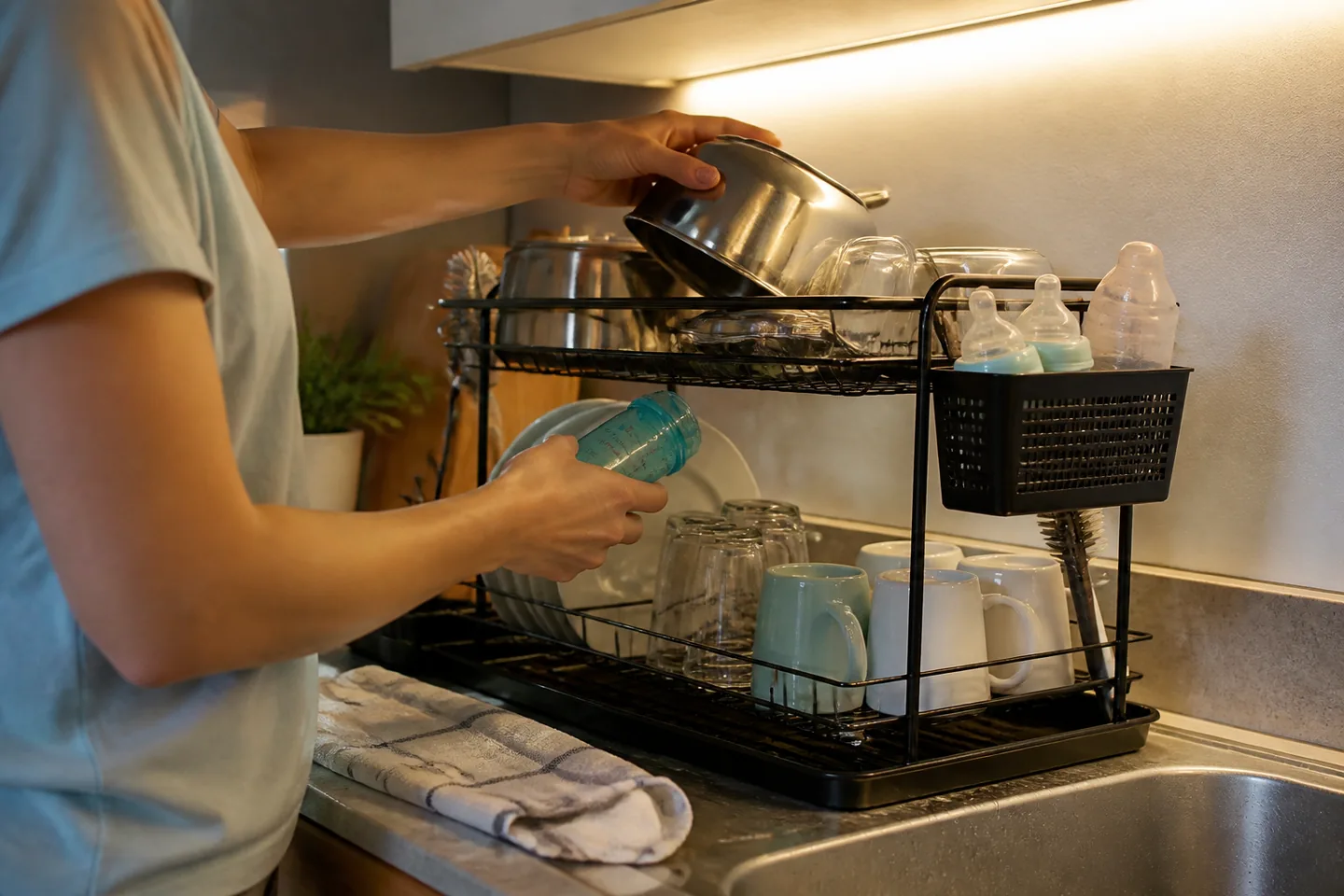
An original editorial scene created for Godi's A Geek. Products shown are unbranded and illustrative.
After dinner, the rack needs to hold a pot, four cups, and a few bottle parts without blocking the coffee maker. Bad drainage turns clean dishes into a wet counter.
The real-life problem this purchase should solve
Measure the usable counter beside the sink and note which items never go in the dishwasher. Choose capacity around that hand-wash load, not the total number of dishes in the house.
Before opening a retailer tab, write down the exact place, person, and repeated task this purchase is meant to serve. That small step prevents a premium feature from becoming a substitute for fit.
What is worth paying for
A removable drain board, cup support that does not drip outside the tray, separated utensil sections, and parts that fit the sink for cleaning.
- Drainage direction matched to sink position
- Capacity for real hand-wash items
- Removable washable components
- Rust-resistant construction with stable feet
Households hand-washing cookware, bottles, or delicate items each day.
The tradeoff: Two tiers add capacity but can make lower dishes harder to place and the whole rack harder to clean.
What to skip
Avoid racks with coated wires already chipped, fixed trays that cannot be scrubbed, and two-tier designs that feel unstable with heavy cookware.
Prices, bundles, availability, and model details change. Compare current published information and the latest manual before buying. When a product affects child safety, food handling, health, flooring, or electrical use, follow the manufacturer and relevant professional or public authority first.
A five-minute buying checklist
- Measure counter and sink lip
- List hand-washed items
- Check drainage direction
- Confirm rack fits sink for cleaning
- Save the receipt and the latest instructions in one place.
Our bottom line
A drying rack should direct water into the sink, hold the dishes you hand-wash, and come apart before grime settles in. The strongest choice is usually the product that removes friction from a repeated task, fits the space you already have, and remains straightforward to maintain after the excitement of buying it has passed.
Frequently asked question
Do I need the most expensive version?
Usually not. Pay for the feature that solves your actual constraint—fit, cleanup, replaceable parts, durability, or safer operation—and be cautious about bundles built around accessories you have no clear plan to use.